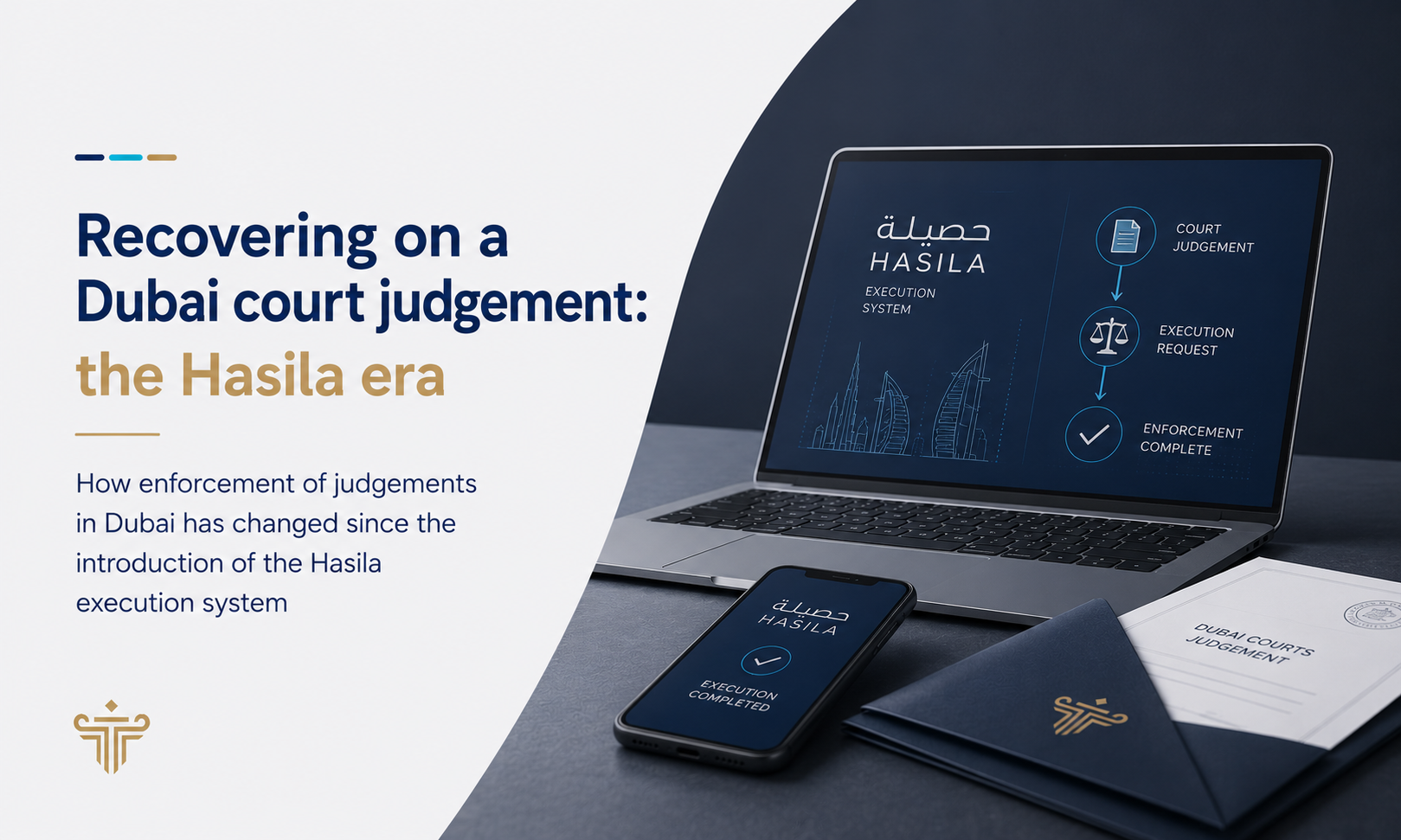
How enforcement of judgements in Dubai has changed since the introduction of the Hasila execution system, and what it means for claimants.
Obtaining a judgment has never been the hard part. Collecting on it is. For years the execution stage was where well-founded claims went to wait, mired in paper files and manual searches. The Hasila system was built to change that, and for the most part it has.
From paper files to a digital docket.
Hasila brought execution onto a single electronic platform, linking the courts to the registries and databases that matter, bank accounts, vehicle and property registers, and licensing records. An execution file that once moved at the speed of correspondence now moves at the speed of a database query.
What Hasila changed.
The practical effect for a judgment creditor is twofold. Asset discovery is faster and more comprehensive, because the relevant registries can be searched centrally. And attachment is quicker: orders that once took weeks to give effect can now reach a bank account or a registered asset in days.
Centralised, electronic asset searches across linked registries.
Faster attachment of accounts, vehicles, and property.
Greater transparency for the creditor over the file’s progress.
The limits that remain.
Hasila is a powerful tool, but it is not a guarantee of recovery. It cannot find assets a debtor has genuinely placed beyond reach, nor assets held abroad. A debtor with no traceable onshore assets remains a difficult target whatever the platform. And cross-border enforcement still depends on treaties and reciprocity, not on the local system.
Advice to claimants.
The era of the dormant execution file is largely over, but diligence still pays. Identify the debtor’s likely assets early, move to attach promptly once judgment is in hand, and treat enforcement as a phase to be planned for at the outset of a claim, not an afterthought once the judgment is won.